 Poseidon
Systematic charity is more effective than one-off campaigns because it gives funds the main thing — the ability to plan. Regular, even small donations let an organisation sustain long-term programmes, help steadily all year rather than only on holidays, and respond to needs in time. A hundred hryvnias monthly brings a fund more benefit than a thousand once a year, precisely because of predictability.
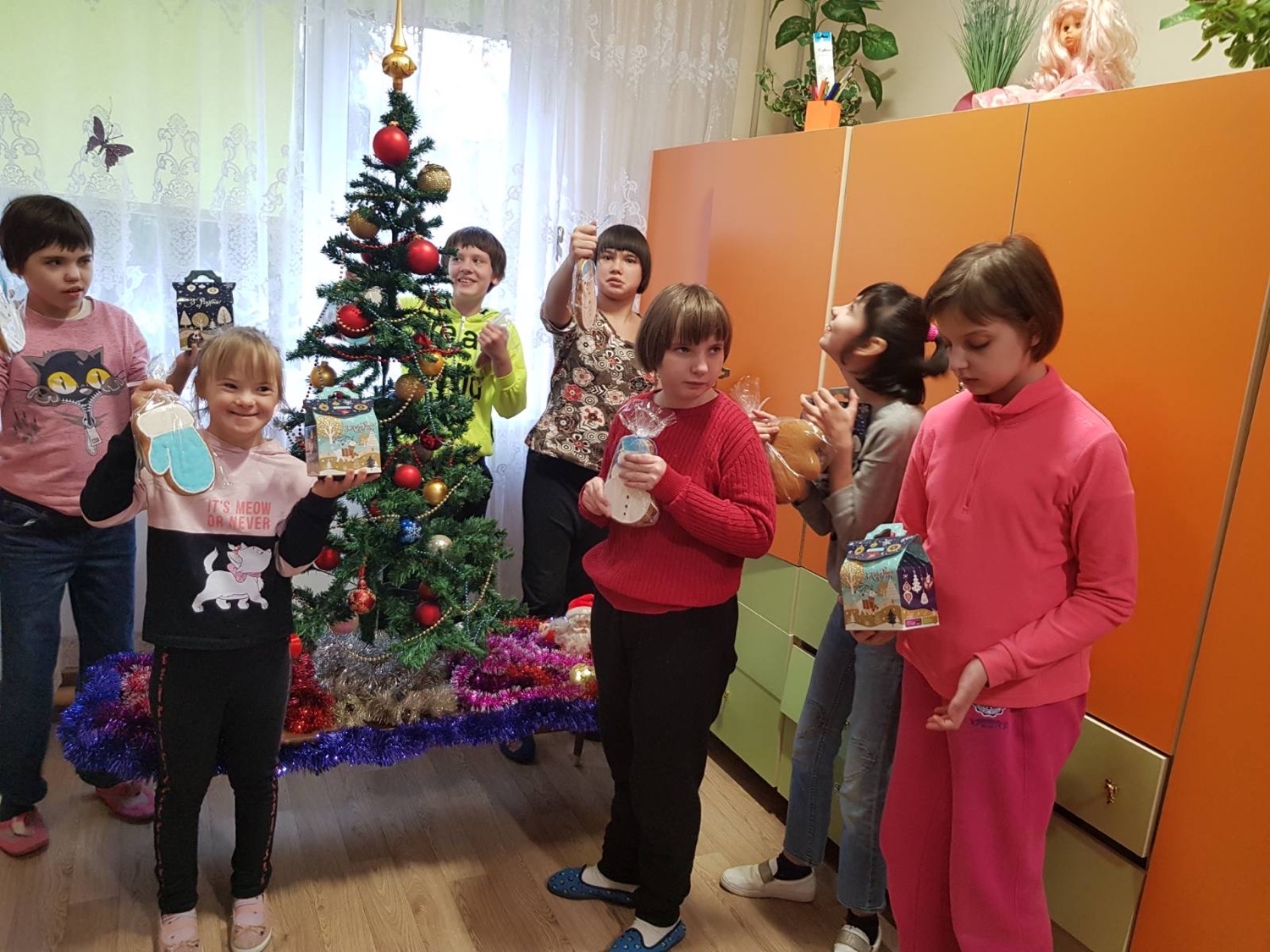
At the end of December charity sees a real boom: everyone wants to give children a celebration, close out fundraisers, do a good deed as the year wraps up. That is touching and, in its way, important. But behind it lies an uncomfortable truth: the lives of those in care continue through grey January, through unremarkable March, through hot August — when the cameras are already off and the impulses have faded.
How the «seasonality» of kindness works
For most funds, donations are distributed very unevenly across the year. There are two or three spikes — winter holidays, loud news occasions, sometimes spring or autumn campaigns — and long «dead» stretches in between. For an organisation running ongoing programmes, this see-saw is a serious problem: in December there's plenty of money, while in February, when the same things have to be paid for, it can run critically short.
What happens in the «quiet» months
To see the problem clearly, picture a typical institution or family a fund helps. In December aid comes from everywhere: gifts, food, attention, celebration. Then January arrives — and the flow drops sharply. Yet the needs haven't gone anywhere: the children still have to be fed, treated, driven to lessons; the family is still short of means; the elderly person still needs medicine and care.
It is precisely in these «quiet» months that it's decided whether help is systematic. One-off donors have already forgotten the fundraiser until next December. But a fund has to sustain its programmes all year — and it can do so only thanks to those who support it steadily, monthly, regardless of the holiday calendar. Regular donors are the very pillar that holds help up exactly when general attention subsides.
Why one-off campaigns are not enough
A holiday campaign is a flash: bright, emotional, one-off. It is needed, it brings joy and draws attention. But it doesn't treat people every day, doesn't feed them all year and doesn't pay specialists' work in the off-season. When all attention and all resources are concentrated on a few dates, the rest of the calendar is left without reliable support.
The problem isn't that campaigns are bad — they're wonderful. The problem is when they become the only form of help. A child, an elderly person or a veteran needs support not only on 19 December or 1 June, but monthly — because their needs know no holiday calendar.
What regularity gives a fund
Regular income changes literally everything for a fund. Here is what becomes possible when an organisation has a predictable monthly flow.
- Planning. A fund that knows a certain sum will arrive each month can take on long-term commitments — lasting programmes, regular purchases, paying specialists.
- Stability for those in care. Help arrives evenly rather than in «feast-or-famine» waves, so people aren't left alone with a problem in the «off-season».
- A fast response to the urgent. With a steady flow, a sudden need can be met at once, without waiting to raise money from scratch.
- Lower fundraising costs. Retaining a regular donor is far cheaper than constantly seeking new ones for every campaign — so more money goes to the help itself.
- Resilience to crises. A diversified flow of small regular contributions is more reliable than dependence on a few large one-off patrons.
Kindness that repeats matters more than kindness that impresses.
The maths of generosity
Many feel a small sum changes nothing: «what good is my hundred hryvnias». But this is where the most important misunderstanding hides. The strength of regular charity is not in the size of a single contribution but in the number of people and in predictability.
Let's count. Imagine a thousand people donate 100 UAH a month. That's 100,000 UAH monthly and 1.2 million hryvnias a year of stable, plannable resource. And not random resource, but the kind a fund can firmly count on when budgeting its programmes. No one-off campaign gives such stability.
And conversely: the same person who would donate 1,200 UAH once a year at Christmas gives the fund a sum at a single moment — and then for 11 months the organisation doesn't know whether it will recur next time. The same total, split into regular contributions, works incomparably more effectively.
Donor psychology: why it's easier for us to give one-off
If regular help is so much more effective, why do most people still lean towards one-off donations? The answer is in psychology. A one-off donation to an emotional story gives an instant sense of good done: you saw, you responded, you transferred, you felt relief. Regular support gives no such emotional «burst» — it's quiet, unnoticeable, routine. So the brain prefers a vivid one-off gesture to «boring» consistency.
Understanding this trap is already half the battle. If you realise you reach for one-off donations precisely because of the emotion rather than the effectiveness, it's easier to make a conscious decision in favour of regularity. A small automatic payment gives no monthly «burst» of emotion — but it gives those in care monthly stability. It's a choice of reason in favour of real results, not an instant feeling.
How to turn a one-off donor into a regular one
Funds long ago noticed a pattern: a person is easiest to attract through a bright campaign or a moving story, but real value appears when a one-off donor becomes a regular one. If you've already helped someone and want your help to work at full force, the move to regularity is the natural next step.
- Start with a small sum you definitely won't feel in your budget. Psychologically it's easier to sustain a small regular contribution than a large one.
- Set up an automatic payment, so you don't rely on memory and decide anew each time.
- Choose one fund you trust, instead of scattering small sums across a dozen fundraisers.
- Follow the reports — seeing the result of your own regular support is pleasant and motivates you to continue.
Regularity as resilience to crises
There's one more important dimension of systematic charity rarely spoken of — resilience. A fund that lives off a few large one-off patrons is extremely vulnerable: if one or two pull out, the programmes are at risk. Whereas a fund resting on thousands of small regular contributions is stable: losing a few donors is barely felt, and the overall flow stays predictable.
For society this means a culture of mass regular charity makes the whole sector more reliable and independent. When help rests not on a few wallets but on many shoulders, it survives any crisis — economic, seasonal, informational. Your small monthly contribution is a brick in exactly that resilience.
How to choose a comfortable amount
The main obstacle on the way to a regular donation is the fear «what if it becomes hard to pay». It's solved simply: the amount should be such that you literally don't notice it. There are several ways to work it out.
- The «one coffee» rule. Mentally give up one cup of coffee or one small purchase a week — and there's your comfortable monthly amount.
- A percentage of income. Even 0.5–1% of monthly income directed to charity adds up over a year to tangible help, barely touching your budget.
- A fixed «psychologically easy» sum. For some that's 50 UAH, for others 500. The main thing is that the payment doesn't cause inner resistance every month.
Remember: you can always start with the minimum and increase the amount later if you wish. Better to start with a small stable contribution than to put off «until better times» a large one that never comes. Regularity matters more than size — that's the key idea of this whole article.
What regularity gives on a national scale
So far a culture of regular private charity in Ukraine is only forming: many are used to helping one-off and on emotion. But it is precisely the growth of mass regular support that can make the whole charitable sector truly resilient and independent. When hundreds of thousands of people support funds steadily rather than in waves, help stops depending on mood, season or the loudness of individual fundraisers.
By joining regular charity you don't only help a specific fund — you build this culture. Every stable donor makes the norm of regular support a little more familiar for others. And in that, perhaps, lies a long-term meaning even greater than the sum of a single contribution.
Myths about regular charity
Regular donations are hindered not only by emotions but by several common myths. Let's dispel the main ones.
- «My contribution is too small to change anything.» The strength of regular charity is in mass. Your 100 UAH, together with the contributions of thousands of others, becomes millions of stable resource.
- «A regular payment is a trap you can't unsubscribe from.» Not true: a regular donation can be paused or cancelled at any moment, it is entirely under your control.
- «Better I decide myself when to help.» Spontaneity is pleasant but unpredictable for a fund. Regularity doesn't deprive you of the chance to also help on special occasions.
- «Funds just want to tie me down forever.» Funds need not a «lock-in» but predictability, to plan help. This is in the interest of those in care, not the organisation's abstract gain.
How regularity changes the donor too
There's another, less obvious effect of systematic charity. A one-off donation is an event easy to forget the next day. Regular support gradually becomes part of your identity: you didn't just «help somehow» — you are someone who constantly supports a particular cause. That changes your attitude — a sense of involvement appears, an interest in the results, a wish to learn more.
Many regular donors admit that over time their small monthly donation became one of the things they quietly take pride in. Not a loud gesture, but a steady, unnoticeable habit of making the world around them a little better. And it is from such habits of thousands of people that a healthy, caring society is built.
This doesn't mean giving up campaigns
It's important not to rush to the other extreme. One-off campaigns are the heart of charity, its emotion, its celebration and a way to draw new people in. Systematic support is its backbone, without which daily work is impossible. Both are needed. The ideal model is when bright campaigns bring people in, and some of them stay as regular donors and turn a one-off impulse into a steady pillar.
Set up a small regular contribution — an amount you definitely won't notice in your budget (even 50–100 UAH a month). It is regularity, not the size of a single payment, that makes you a real pillar for a fund and those it helps.
The short version
- Regular help is more effective than one-off because it gives a fund the main thing — the ability to plan.
- 100 UAH monthly brings more benefit than 1,200 UAH once a year.
- A steady flow of small contributions makes a fund resilient to crises and seasonal dips.
- Choose a comfortable amount you won't notice in your budget and set up an auto-payment.
- Campaigns are needed, but it is regularity that turns good intentions into lasting change.
One-off impulses of kindness are wonderful, and there's no need to give them up. But if you want your help to really change something — make it regular. It is stability that turns good intentions into real, lasting change in specific people's lives. And it is exactly these monthly contributions, unremarkable at first glance, that carry all the daily work of funds.