 Poseidon
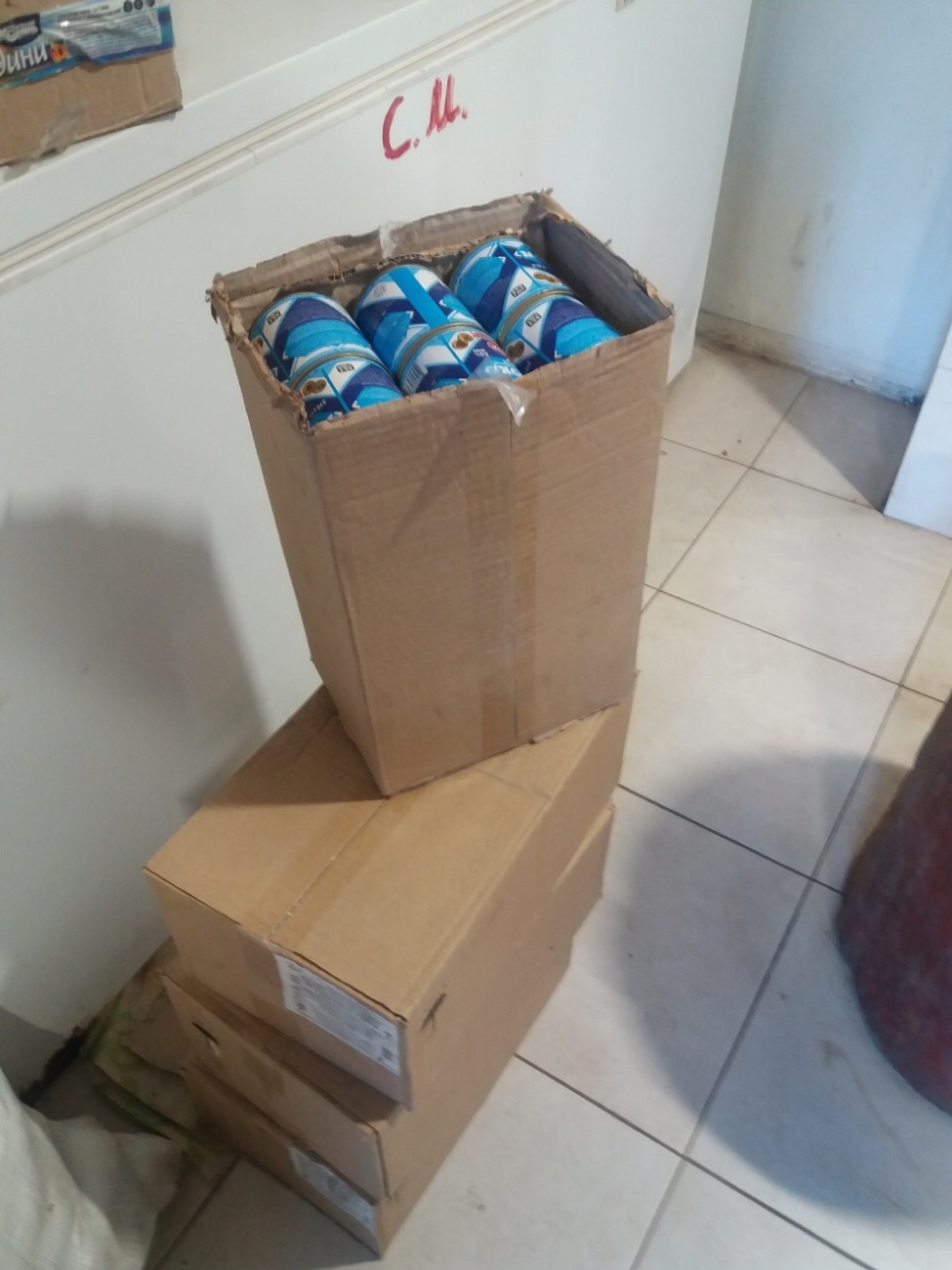
An honest fund accounts for every hryvnia: how much was collected, how much went directly to help (programme costs) and how much to organisational needs (administrative costs), with photos, receipts and letters of thanks from institutions. If you see the amounts, the directions and proof of results, the money is working as promised. A complete absence of figures, or the slogan «it all goes directly, the fund takes nothing», should put you on guard.
«Where does my money actually go?» is a donor's most honest and important question. And the fund itself should answer it, without waiting to be asked. Transparency is not a courtesy but a mandatory element of trust. Let's look at how reporting is set up, what the different types of expenses mean, and what to watch for to tell real openness from pretty words.
What a fund's expenses consist of
A charity's expenses fall into two broad types, and understanding the difference between them is critically important.
Programme costs are the help itself and everything that directly provides it: food, medicine, clothes, gifts, paying specialists (psychologists, rehabilitation therapists, social workers), repairs in institutions, organising events for those in care. This is what the fund exists for.
Administrative (operating) costs are what make the fund's work possible: bank fees on transfers, communications and the website, logistics and fuel, accounting, legal support, basic tools for the team. This type of cost is often met with hostility, though the first type could not exist without it.
Why «100% directly» is a myth
The phrase «all the funds go directly, the fund takes nothing» sounds beautiful and appealing. But it almost always either misleads or hides the fact that organisational costs are simply covered from another source (a grant, individual patrons, the founders' own money).
Think for yourself: transferring money costs bank fees. Delivering aid to the other end of the region needs fuel and time. Coordinating dozens of people, purchases and institutions is work that someone does. The question is not whether there are administrative costs — there always are. The question is whether they are reasonable and whether the fund shows them honestly.
Transparency is not a promise of «zero costs», but an honest figure next to proof of a result.
Moreover, zero or artificially lowered admin costs often mean a fund runs «on pure enthusiasm» and cannot afford proper reporting, audits or qualified specialists. Sometimes a small, transparent share for administration is precisely a sign of a mature, sustainable organisation, not a reason for suspicion.
What share of admin costs is considered normal
There is no single «correct» percentage — it all depends on the type of activity. A fund that hands out ready-made aid and a fund running complex rehabilitation programmes will have different cost structures. International practice often cites a range of roughly up to 20–25% for administration, but that is very rough.
Far more important than the percentage itself is honesty and proportionality: does the fund openly show its cost structure, are the costs justified and does the bulk of the money still go to help. One transparent fund with 15% admin costs is more reliable than another that swears by «zero» but shows nothing.
How to read a fund's report
When you open a report, run through a simple checklist. A good report gives answers rather than raising new questions.
- There are concrete amounts for a period, not just general words about «a lot of work».
- Costs are broken down by direction: it is clear what exactly, for whom and roughly for how much was bought.
- There is proof — photos, video, receipts, invoices, letters of thanks from institutions.
- Dynamics are visible: how many events were held, how many people received help.
- The source of income is clear: where the money comes from (donations, grants, patrons).
- Reports are regular, not appearing once every few years under pressure.
The evidence you can trust most
Not all evidence is equal. A photo of smiling children is nice, but easy to stage and hard to verify. The most convincing is confirmation from a third party that received the help.
A letter of thanks from a children's home, residential institution, hospital or military unit, a letter from the head of an institution, a cooperation contract — all these are worth more than any banner, because they come not from the fund but from those the fund helped. That is why Poseidon keeps and publishes letters of thanks from partner institutions: it is confirmation of the result through external, independent voices.
Where the money comes from: not only your donations
To understand a fund's expenses, it helps to know about its income too. A non-profit's funds usually come from several sources, and the more there are, the more stable the organisation.
- Private donations — one-off and regular contributions from people, often the basis of mass support.
- Corporate philanthropy — help from business in money, goods or services.
- Grants — targeted funding from other funds or international organisations for specific programmes.
- Patrons — large contributions from individual benefactors.
- Non-cash help — goods, services, pro bono work by specialists.
Often it is precisely grants or individual patrons that cover administrative costs, so a larger share of private donations can go directly to help. This is another reason why the slogan «zero costs» is deceptive: the costs are there, they may simply be covered by another source.
How to compare two funds
Sometimes you have to choose between several organisations working in the same field. Comparing them only by «percentage on administration» is a mistake: a fund with complex programmes and specialists will objectively have higher operating costs than one that simply transports ready-made aid. Look wider.
- Transparency: whose reports are more detailed, more regular and with real proof?
- Results: who shows concrete, confirmed results rather than only emotion?
- Openness to questions: who calmly answers awkward questions?
- Stability: who has worked for years rather than appearing for one loud fundraiser?
- Fit with your values: whose field and approach are closer to you?
What «targeted» and «non-targeted» fundraising means
It helps a donor to distinguish two types of fundraising. A targeted fundraiser is for a specific need (for example, a child's treatment or buying equipment). The fund must spend those funds on exactly the stated purpose, and reporting on them is simpler. A non-targeted (statutory) fundraiser is for the fund's activity in general; the organisation itself distributes these funds among programmes as needed.
Both types are normal and needed. Targeted fundraisers give a donor a sense of specifics and control. Non-targeted ones give a fund flexibility — the ability to direct funds where it is hottest and to cover less «popular» but important costs that targeted fundraisers usually don't reach (the very logistics, specialists, administration). A healthy fund combines both.
What to do if there are no reports, or they are unconvincing
If a fund doesn't publish reports, that is not yet proof of dishonesty — perhaps the organisation is small and simply hasn't got round to it. But as a donor you have the right to ask. Write to the fund directly: «Please tell me how I can see a report on the use of funds for the last period». The reaction will say a lot.
- They calmly send a report or a link — a good sign.
- They explain the report is being prepared and show at least fragments — acceptable.
- They take offence, dodge the answer or accuse you of distrust — a warning sign.
A good report answers three questions: how much was collected, what it was spent on and who confirms it. If even one is missing, ask for details before donating again.
Why asking about money is normal
Many feel awkward asking a fund where their donations went: it seems tactless, as if you distrust a good cause. In fact it is the opposite. A question about the use of funds is not distrust but a sign of responsible giving. You are not just handing money into the void — you want it to work, and you have every right to know how.
A healthy fund welcomes this attitude. For it, an attentive donor interested in results is more valuable than an indifferent one who transferred and forgot. For it is precisely donors' attention that keeps the sector sharp and pushes organisations toward greater transparency. So don't be shy about asking — you are doing a favour not only to yourself but to the whole culture of honest charity.
What spending distribution looks like in practice
To make the abstract «programme and administrative costs» clearer, let's imagine a simplified, purely illustrative picture. Suppose a fund collected a notional UAH 100,000 in a month. Where might it go?
- Direct help to those in care — food, medicine, clothes, gifts, paying specialists. The largest part.
- Organising events and campaigns — everything that makes the help targeted and delivers it to people.
- Logistics — delivering aid, fuel, transport.
- Operating needs — communications, bank fees, accounting, basic working tools.
- A reserve — a small buffer for urgent, unforeseen needs.
The exact proportions differ for each fund and depend on the type of activity. But the healthy principle is always the same: the bulk goes to direct help and its provision, a smaller part to operating needs, and all of it is shown openly. If a fund can break its costs down roughly like this, that is a good sign of maturity and transparency.
Note: even in this simplified example «100% directly» is impossible — logistics and operating needs always exist. The only question is whether they are reasonable and whether the fund shows them honestly, rather than hiding them behind pretty slogans.
Five questions worth asking a fund
If you want to quickly assess an organisation's transparency, ask it (or find the answers yourself) a few simple questions. The reaction and the presence of answers will say more than any slogans.
- How much did you collect and spend over the last period?
- Which directions did those funds go to, and in roughly what proportions?
- How are your administrative costs covered?
- Can one see proof — reports, photos, letters of thanks from institutions?
- How do you report to donors, and how often?
For a conscientious fund these questions are not hard — the answers to most are usually already on the site or in social media. But if in reply you hear irritation, evasion or accusations of distrust — that is an answer in itself, and not in the organisation's favour.
Transparency is a two-way process
Remember that transparency rests not only on funds but on donors. When we transfer money thoughtlessly, without reading reports or caring about results, we inadvertently encourage opacity: why bother with reporting if no one looks at it? And conversely — the more donors value openness and choose transparent funds, the more advantageous honesty becomes for the whole sector.
So your attention to where the money goes is not fussiness or distrust. It is a contribution to a culture where honest organisations win rather than lose. By asking and reading reports, you make charity more transparent not only for yourself but for everyone.
So, when choosing whom to help, look not at the loudness of appeals but at the depth of reporting. A fund that is not afraid to show figures and proof already proves, by that very fact, that it has nothing to hide. And that means your money is safer beside it.